

In the modern enterprise, data doesn’t just sit still; it flows. It moves through a complex web of messaging queues, event streams, and processing engines that span from legacy on-premises data centers to the cutting edge of the public cloud. This “Integration Infrastructure” is the nervous system of the business.
Yet, for many organizations, this nervous system is showing its age. Teams are often trapped in a cycle of maintaining legacy IBM MQ or TIBCO setups while simultaneously trying to stand up modern Apache Kafka®, RabbitMQ, or Apache ActiveMQ® and Artemis. Even when using Apache Camel to try and stitch these worlds together, the result is often a fragmented, “Frankenstein” architecture that slows down innovation and increases operational risk.
It is important to move the conversation beyond simple maintenance and focus on Modernization.
As the world’s only platform for modernizing messaging, event processing, and streaming across the hybrid cloud, we help organizations bridge the gap between where they are and where they need to be. But modernization isn’t just a tech trend—it’s a move backed by hard economic data.
The Economic Reality of Modernization
To understand the true value of modernizing these complex environments, meshIQ commissioned a Forrester Total Economic Impact™ (TEI) study. The results were a wake-up call for IT leaders hesitant to overhaul their middleware:
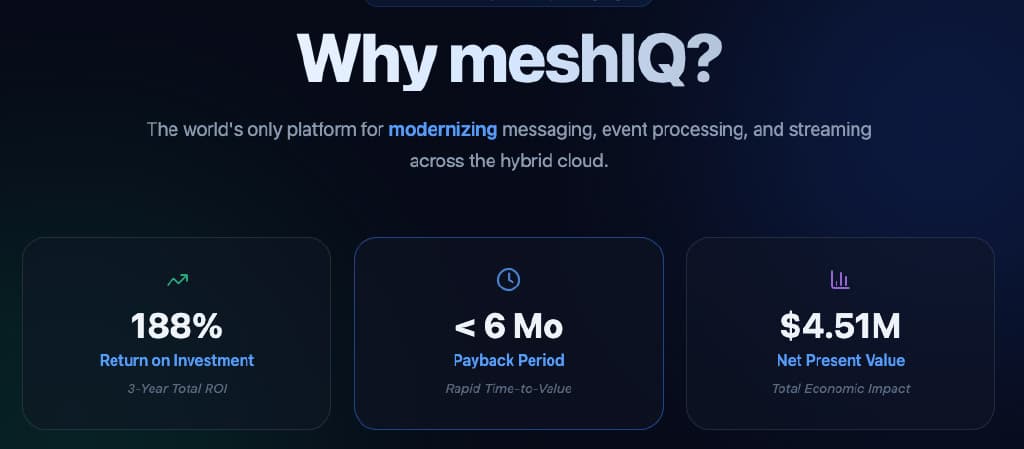
- 188% Return on Investment (ROI): A three-year total return that proves modernization pays for itself nearly twice over.
- Payback in Less Than 6 Months: In an era where “time-to-value” is everything, the meshIQ platform delivers a break-even point in the first two quarters.
- $4.51M Net Present Value (NPV): The total quantified benefit to the organization over three years.
The Three Pillars of the Modernization Journey
Modernization isn’t just about moving to the cloud; it’s about changing how you engage with your technology. Through our platform and the insights from the Forrester report, we see three critical pillars that define a successful journey.
1. Unified Command and Visibility
The biggest hurdle to modernization is fragmentation. When your legacy tech and your modern tech live in different silos, visibility dies. meshIQ’s “Stitch” visibility provides end-to-end message tracking across different protocols. Whether a message starts in a mainframe and ends in a cloud-native microservice, you can see it, track it, and manage it from a single interface.
With the upcoming release of meshIQ v12.1, we’re making this even easier. The new Manage Home Page serves as an intelligent launchpad, putting connections and perspectives at your fingertips the moment you log in, ensuring you spend less time searching and more time solving. Join us on May 7th for the 12.1 launch webinar.
2. Radical Efficiency Through AI
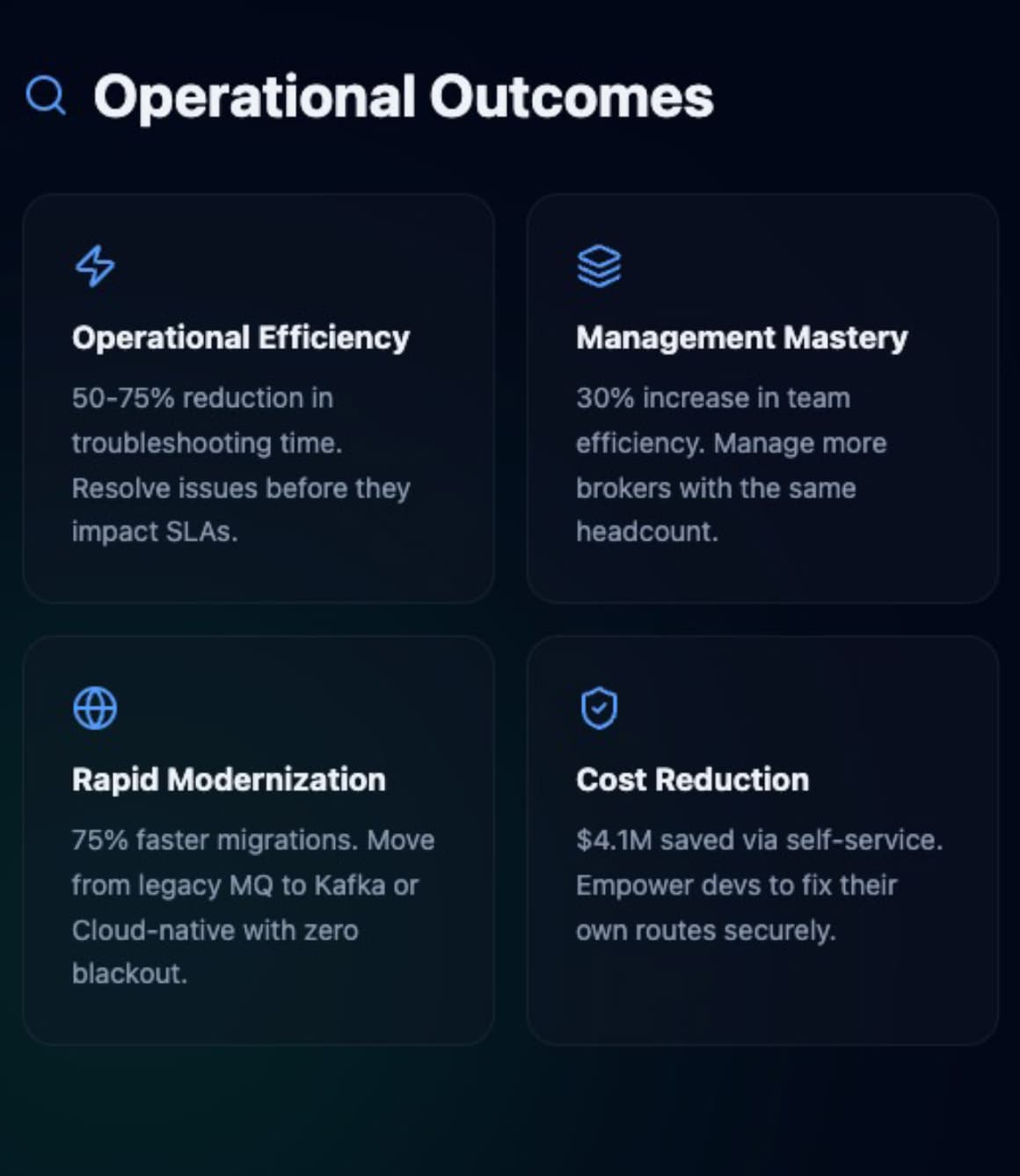
Modernization should decrease your workload, not add to it. The Forrester study found that organizations using meshIQ saw a 50-75% reduction in troubleshooting time.
By shifting from reactive firefighting to proactive, data-driven management, teams can resolve issues before they impact SLAs. We’ve taken this a step further with Ops Pilot AI. By leveraging agentic AI for guided troubleshooting and automated remediation, we are effectively giving every admin a “co-pilot” for their middleware stack. This isn’t just an upgrade; it’s a modern way of working.
3. Secure Self-Service (The “Shift-Left” Movement)
One of the most striking stats from the TEI report was the $4.1M saved via self-service. Historically, developers had to wait for middleware admins to create queues or check routes. By modernizing the interface and providing secure, role-based access, meshIQ allows developers to fix their own routes and manage their own resources. This removes the “middleware bottleneck,” allowing the business to ship code faster. Features like our new context-aware delete dialogs in v12.1 ensure that even as you empower more users, you maintain the guardrails necessary to prevent accidental outages.
Eliminating the “Blackout” of Migration
Perhaps the most daunting part of modernization is the migration itself. Moving from legacy MQ to Apache Kafka® or a cloud-native service is often viewed as a high-risk operation with potential “blackout” periods.
meshIQ changes that math. Because our platform treats “legacy” and “modern” technologies as first-class citizens, you can run them in parallel, compare performance in real-time, and cut over with total confidence. The result? Organizations report up to 75% faster migrations compared to manual methods.
Conclusion: The Path Forward
Modernization is no longer optional. As customer expectations for real-time data increase, the infrastructure supporting that data must be agile, visible, and intelligent.
The Forrester TEI study proves that the meshIQ platform isn’t just an operational tool—it’s a financial and strategic catalyst. By reducing troubleshooting time by up to 75% and increasing team efficiency by 30%, we empower you to stop managing technical debt and start building the future of your hybrid cloud.
Are you ready to move from maintenance to modernization?